The argument in favor of using filler text goes something like this: If you use real content in the Consulting Process, anytime you reach a review
Contact Info
Chicago 12, Melborne City, USA
(111) 111-111-1111
Example@gmail.com
Week Days: 09.00 to 18.00 Sunday: Closed
Application of Mangrove Rehabilitation Technology and Community Capacity Building through Mangrove Nurseries for Rehabilitation of Damage in the Coastal Areas of Demak Regency
Application of Mangrove Rehabilitation Technology and Community Capacity Building through Mangrove Nurseries for Rehabilitation of Damage in the Coastal Areas of Demak Regency
Our Activities
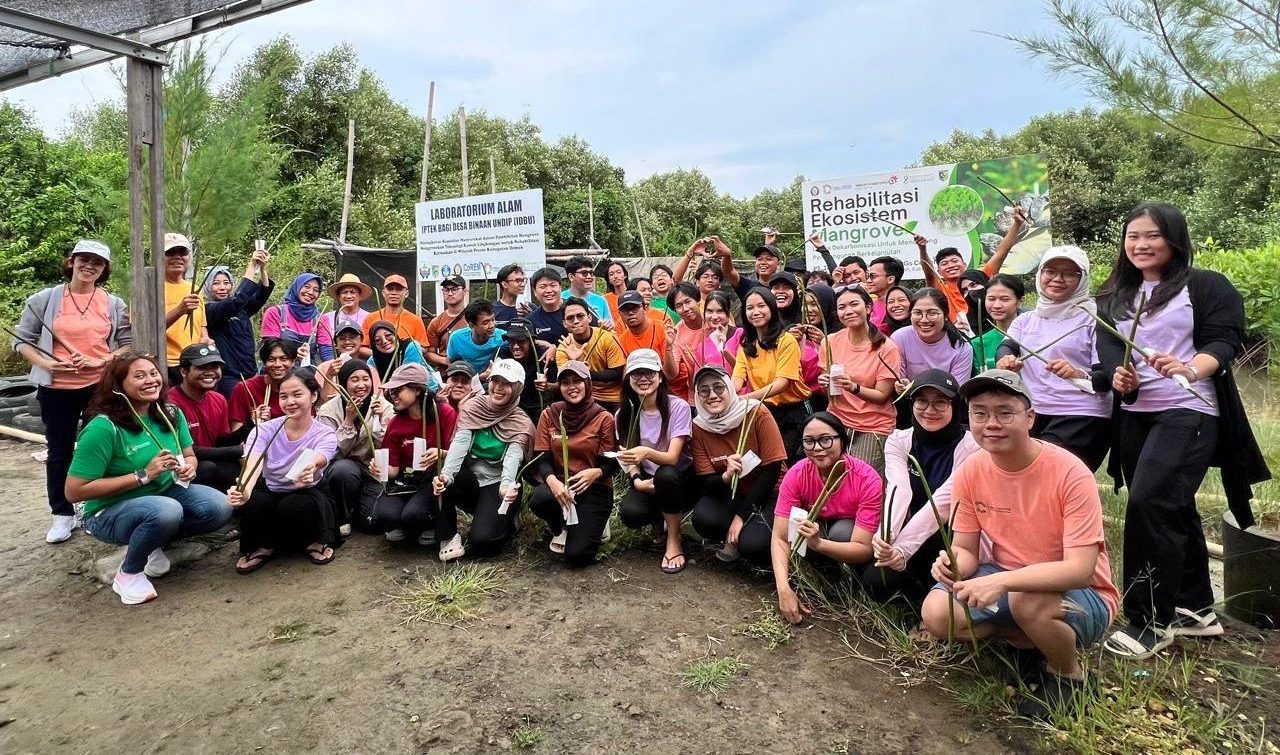
The Implementation of Mangrove Rehabilitation Technology and Community Capacity Building through Mangrove Seedling Production for Coastal Ecosystem Restoration in Demak Regency (2021–2025) is a long-term research and community empowerment initiative focused on restoring degraded coastal ecosystems in Tambakbulusan Village, one of the areas severely affected by abrasion and sedimentation dynamics. This program is a collaborative research effort between the Ministry of Higher Education, Science, and Technology, the SDGs Center of Universitas Diponegoro, the Sustainability Indonesia Foundation, and the Government of Demak Regency. Together, these institutions develop science-based, technology-driven, and community-centered approaches to support the sustainability of the Tambakbulusan coastal area.
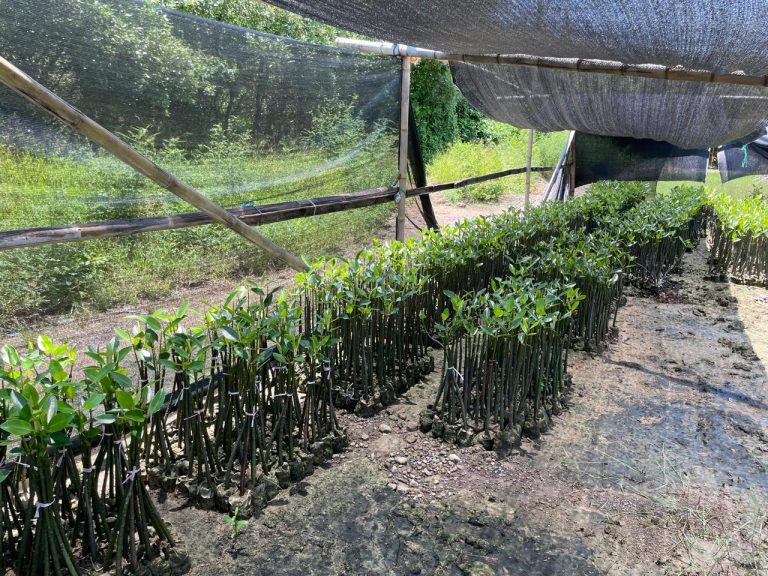
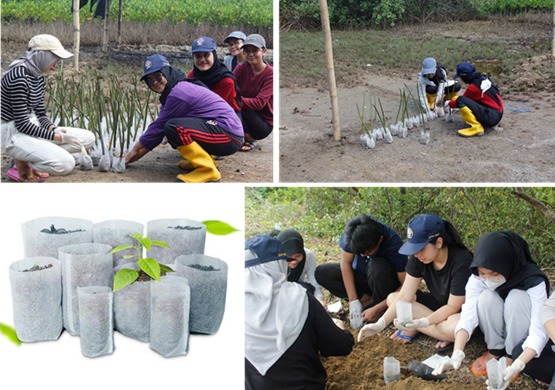
The program prioritizes the development of environmentally friendly mangrove seedling technology as the foundation for ecosystem restoration. Seedling production is carried out using biodegradable polybags, planting containers that decompose naturally and do not leave plastic waste in coastal environments. The planting media is enriched with mangrove-derived biochar, which enhances nutrient availability, improves soil structure, and supports stronger seedling growth, resulting in more resilient seedlings ready for planting in erosion-prone areas. This technology is designed to be efficient, eco-friendly, and capable of increasing the success rate of mangrove rehabilitation during field planting.
In addition to technological development, the program places strong emphasis on community empowerment in Tambakbulusan Village. Local communities are actively involved in every stage of the process, from seedling production and maintenance to mangrove planting. Training and facilitation activities strengthen community capacity in seedling techniques, maintenance practices, site selection, and sustainable management of rehabilitation areas. This community-based approach not only enhances environmental sustainability but also generates economic opportunities through community-managed mangrove nurseries, while empowering residents as key stewards of the coastal ecosystem.
Throughout 2024–2025, the program has evolved into an integrative and adaptive model for mangrove ecosystem management. By combining technological innovation, academic research, and community empowerment in Tambakbulusan, this initiative contributes significantly to coastal ecosystem restoration, increased resilience to climate impacts, and the achievement of sustainable development objectives in Demak Regency.
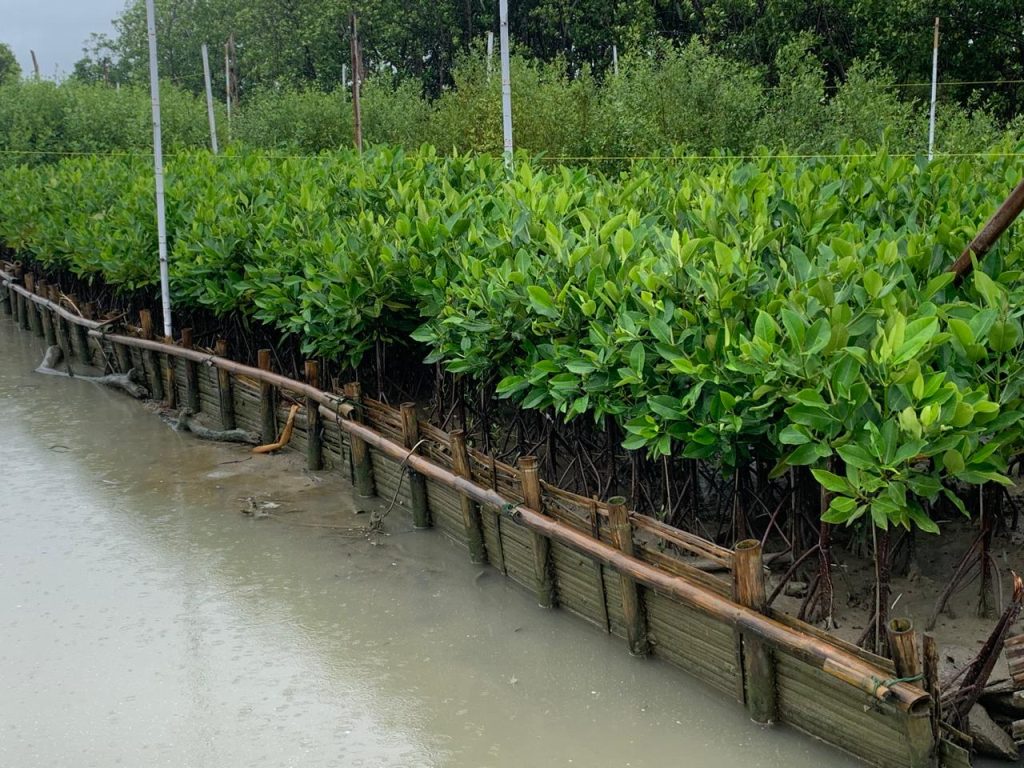
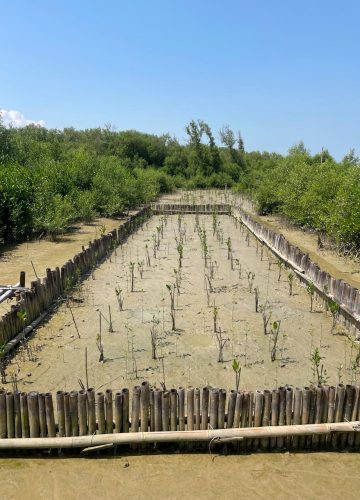
This program produced two key outputs: an environmentally friendly mangrove rehabilitation technology in the form of a mangrove demonstration plot, and a sustainable mangrove nursery technology using biodegradable eco-polybags and biochar. The 'mangrove demplot' serves as a pilot area designed to accelerate coastal ecosystem recovery by stabilizing sediments, providing optimal growing media, and improving the success rate of mangrove planting in natural environments. Meanwhile, the mangrove nursery technology—utilizing naturally degradable eco-polybags and biochar as a soil enhancer—has proven effective in improving seedling quality, strength, and growth performance while reducing environmental impacts associated with plastic use.
Clients :
Kementerian Pendidikan Tinggi, Sains, dan Teknologi Pemerintah Kabupaten Demak